Short answer: a polish refines the surface and often uses fillers to mask swirls and scratches temporarily. Paint correction mechanically levels the clear coat under controlled lighting until defects are physically removed. One is cosmetic; the other is structural. The difference determines whether your paint looks corrected for a week — or for years.
What paint correction actually is
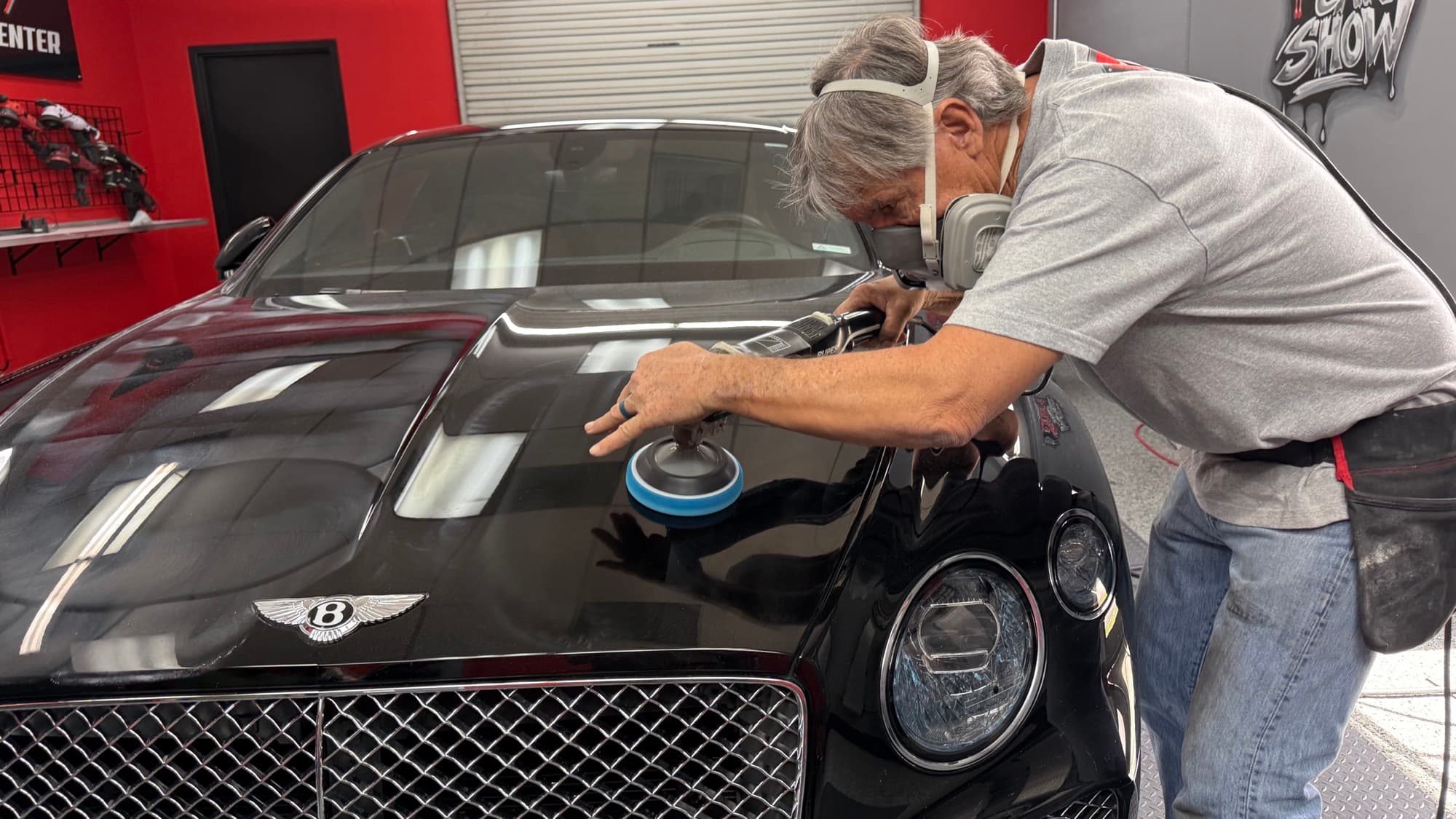
Paint correction is a multi-stage machine polishing process that removes swirl marks, wash-induced marring, water spots, oxidation, and light scratches from automotive clear coat. At The Recon Pros in Huntington Beach, we correct under a 3M SunGun and LED swirl lighting, with a paint-thickness gauge reading every panel before we touch it.
Real correction comes in three tiers:
- 1-stage (Enhancement polish) — a single refinement pass for newer paint with light marring. One Step Correction at The Recon Pros starts at $400.
- 2-stage (Standard correction) — a cutting pass to remove defects, then a finishing pass for gloss. Two Step Correction at The Recon Pros starts at $600.
- Multi-stage restoration — wet-sanding plus multiple compounding steps for deep defects, concours prep, or neglected paint. Inspection-based quote.
What a polish usually is
A standalone polish — the kind offered at volume detail shops for $150–$300 — is typically a one-pass application of a polish compound, sometimes blended with glaze or spray sealant that contains fillers. Fillers are chemicals that temporarily sit inside swirl marks and reflect light similarly to the surrounding paint, so under showroom lighting the defects appear gone.
They are not gone. The first wash or rain cycle flushes the filler and every mark returns. This is how a car leaves a detailer with "corrected" paint and looks swirled again within a week.
How to tell which one you're getting
Ask three questions before you hand over keys:
- Do you measure paint thickness before and after? Real correction requires a gauge. Polishing blind is how thin clear gets burned.
- What inspection lighting do you use? "Good natural light" means no real correction. The answer should include SunGun, halogen, or multi-angle LED swirl boards.
- Can I see the car under lighting before any sealant or coating? If they refuse, they are hiding filler work.
Why it matters before a coating
Any ceramic or self-healing coating — including Revivify — locks in whatever is underneath it. A coating over swirled paint preserves those swirls under a 5-year clear layer. The only honest prep for a coating is correction, not polish. Skipping this step is the single most expensive mistake owners make on a "protected" car.
FAQ
Does paint correction damage the clear coat?
Done properly, no. Correction removes a measured micron-level layer of clear. A qualified tech uses a paint-thickness gauge to confirm there's enough clear to work with before starting, and monitors depth throughout. Over-polishing happens when a shop skips the measurement step.
How long does a paint correction last?
The correction itself is permanent — the defects don't grow back. What changes is whether new defects accumulate from washing. Paired with a Revivify self-healing coating, corrected paint can stay hologram-free indefinitely.
Can correction remove deep scratches?
It removes anything that lives in the clear coat. If a scratch has cut through to primer or metal, that's a refinish job, not correction. The inspection step tells you which is which before you spend money.
Based in Huntington Beach? Book a paint inspection and we'll measure your clear, map defects, and quote the exact correction level your car actually needs.