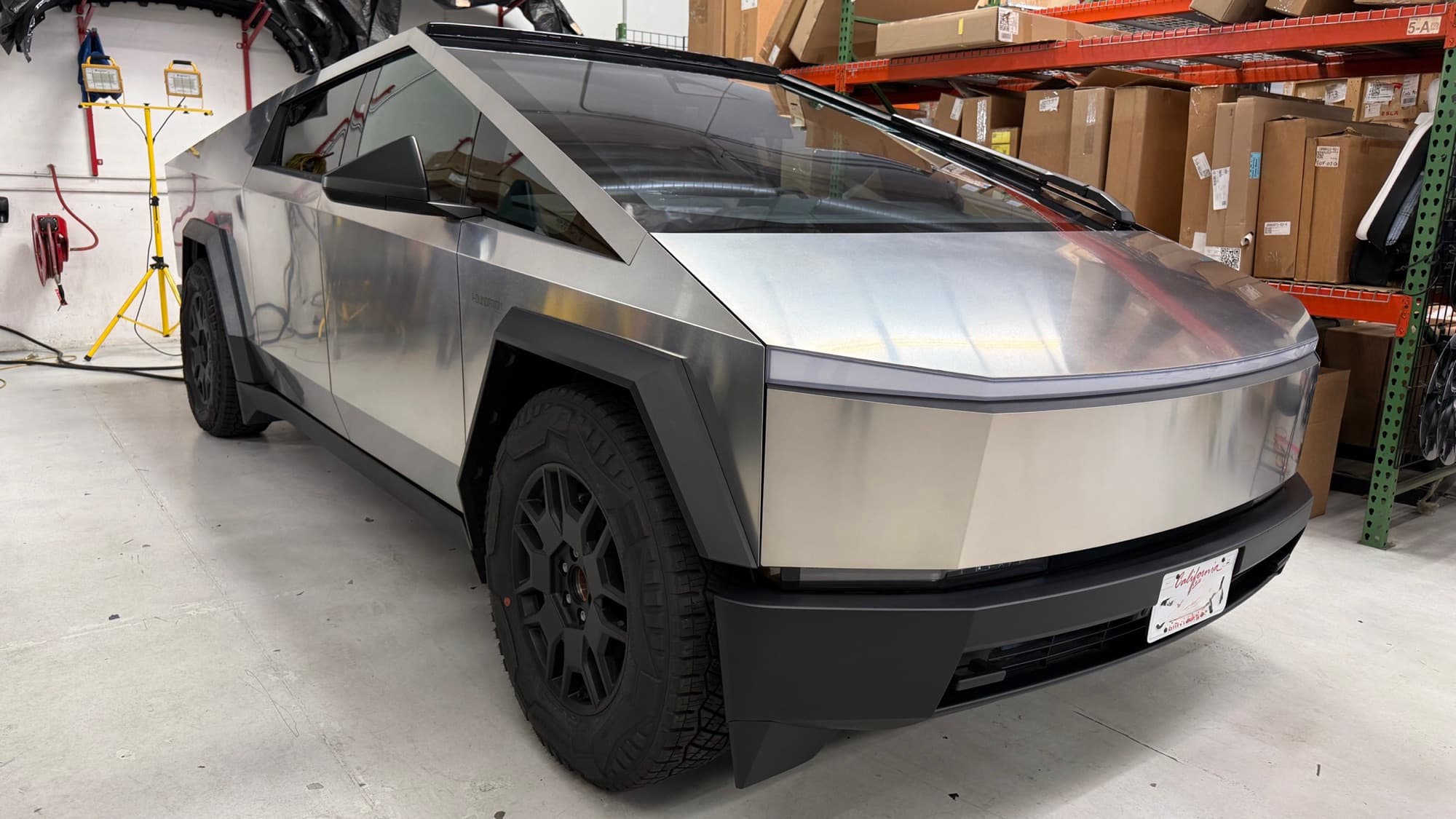
Short answer: Most EVs — not just Tesla — use thinner, softer, low-VOC water-based clear coats for manufacturing and environmental reasons, which means they mar and swirl faster than a comparable gas vehicle. Rivian, Lucid, and Polestar owners see the same early-swirl pattern Tesla owners do, and the correction protocol needs the same lighter-touch approach: gauged panel thickness, softer pads, and a self-healing coating to manage future marring.
Why EV Paint Behaves Differently
The shift to water-based, low-VOC paint chemistry is now standard across most EV manufacturers, not just Tesla. It's measurably softer on the Knoop hardness scale than traditional solvent-based automotive clear coats, which means ordinary wash contact — a touchless car wash, a dusty cover, a careless wipe-down — leaves visible marring sooner. We've measured this same soft-clear pattern across Rivian, Lucid, and Polestar vehicles that come through the studio, not just Tesla.
What Changes in the Correction Process
- Paint-thickness gauging on every panel — EV panel thickness varies more than on traditional gas vehicles, and soft clear leaves less margin for error
- Lighter cutting compounds — aggressive compounds calibrated for harder German or Japanese clear coats will burn through EV clear faster than intended
- Softer foam and microfiber pads — matched specifically to the softer clear, not a one-size protocol used across every car
- Multi-angle LED inspection — soft clear shows holograms that don't always appear on harder paint, so inspection lighting has to catch what a standard walk-around misses
Why a Self-Healing Coating Matters More on These Cars
Because soft EV clear mars faster to begin with, the gap between a rigid ceramic coating and Revivify shows up sooner and more visibly than on a harder-paint gas car. A ceramic-coated EV with no follow-up correction plan will show swirl accumulation within the first year of daily driving. Revivify's self-healing property directly targets the exact failure mode these vehicles are most prone to. See the full mechanism in our Tesla soft-clear correction guide — the same protocol applies across EV brands.
Frequently Asked Questions
Do all EVs have soft clear coat, or just Tesla?
Most current EV manufacturers use similar low-VOC, water-based clear coat chemistry, though exact hardness varies by brand and model year. We gauge and assess each vehicle individually rather than assuming.
Can I use a standard detail shop for my EV, or does it need to be EV-specific?
A shop that doesn't gauge panel thickness or adjust compound aggressiveness for soft clear risks over-polishing an EV. Ask any shop directly what changes for EV paint before booking.
Does correction or coating affect any EV-specific sensors or charging equipment?
No — we mask charge ports, cameras, and sensor housings during any correction or coating work and confirm function afterward, the same protocol we use on Tesla.
Own an EV and noticing early swirls? Book an inspection at The Recon Pros in Huntington Beach.