
The right coating
depends on the car.
Soft Tesla clear, hard German clear, and a Cybertruck with no paint at all are three different jobs. Pick your marque for what actually changes.
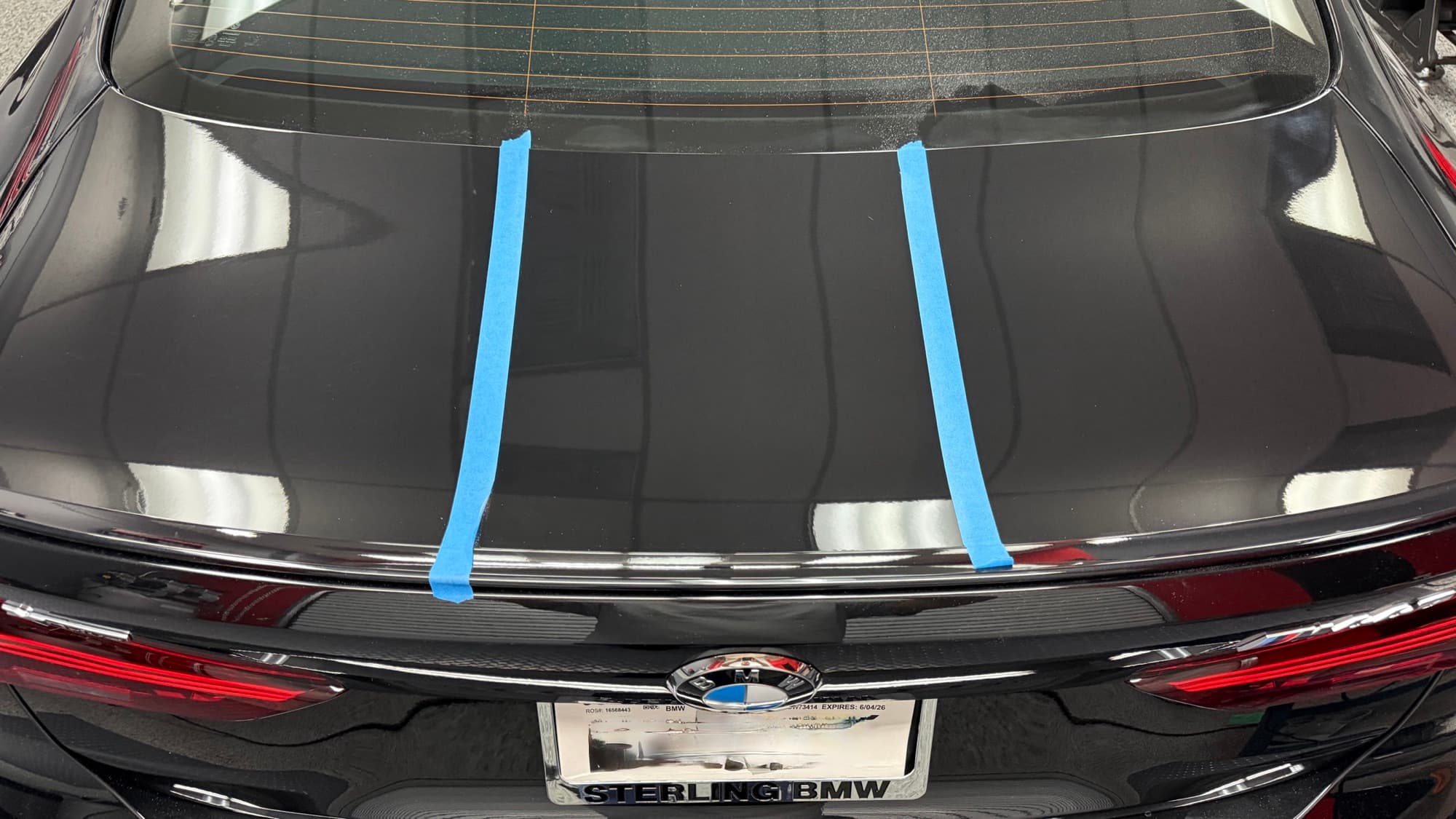
The right ceramic coating depends far more on the car than most owners are told. Paint hardness, clear coat thickness and even whether the vehicle has paint at all change what has to happen before a coating goes on. Tesla's soft, thin, water-based clear mars easily and needs gentler pads and per-panel gauging. German clear on a Porsche, BMW or Mercedes is generally harder, corrects cleanly and holds the result, so the decision moves to coating chemistry rather than cut. A Rivian that is actually used off pavement is degraded by wash contact, not UV. A Cybertruck has no paint or clear coat at all, so paint correction does not apply and the prep is a stainless-finishing process instead. Across all of them the same rule holds: a coating cannot remove a defect, it seals it in, so correction always comes first. The Recon Pros corrects, gauges every panel, and installs Revivify self-healing coating exclusively from our Huntington Beach studio. Revivify coating starts at $600, with correction priced separately.
- Revivify coating
- $600–$4,200+
- Paint correction
- $400–$2,500
- Priced by
- Package + vehicle size
- Full price list
- thereconpros.com/pricing
What changes, car by car.
Each guide covers the paint characteristics, the protocol we use, real pricing, and the questions owners of that car actually ask.
Factory Tesla clear coat is thinner and softer than almost any other modern car. A traditional ceramic coating doesn't fix the swirl problem — it seals it in. Revivify's self-healing chemistry was built for exactly this paint.
German clear coat is generally harder than the soft finishes on EVs and Japanese cars, which means a Porsche corrects beautifully and holds that correction. The variable worth paying for is what goes on top of it.
R1Ts and R1Ss get loaded, dusted, hosed down at trailheads and washed more often than a garage-kept sports car. That wash frequency, not UV, is what actually degrades the finish.
The Cybertruck's exterior is raw stainless steel with no paint and no clear coat. Every assumption behind a normal correction-and-coating job stops applying at the front door.
Harder German clear finishes down cleanly and holds a correction. The question worth thinking about is which coating goes over it — because that decides how the car looks after three years of washing.
Mercedes clear coat corrects and holds correction well. What determines how the car looks in three years is whether the coating over it can repair the marks that washing inevitably introduces.
Exotic bodywork is mostly complex curves, deep intakes and carbon aero — panels that are hard to polish safely and easy to damage in a hurry. This is careful, slow work.
A red Ferrari under direct sun is the most revealing surface in car care. Every hologram, every buffer trail, every wash mark reads instantly — which is exactly why the correction has to be right before any coating goes on.
Toyota owners keep their cars longer than almost anyone. That changes the maths completely — protection you buy in year one is still working in year eight, and the wash marks you avoid are ones you never have to live with.
A truck that hauls, tows and gets hosed down at a job site is not a garage-kept coupe. The protection that suits it is the kind that survives being used, not the kind that needs babying.
Commuter cars cover serious mileage and get cleaned often, usually in a hurry. The finish does not fade so much as get slowly scratched — and that is a problem with a real solution.
Nobody buys a Challenger in a quiet colour. Deep reds, blacks and high-metallic finishes are exactly the ones that show every wash mark — which makes the correction stage matter more here than almost anywhere.
The order is the whole thing. A coating is transparent and it lasts for years, so whatever your paint looks like on the day it goes on is what you have locked in.
A coating cannot fix your paint. It preserves it.
This is the single thing owners get wrong, on every marque. A coating is transparent and it lasts for years — whatever your paint looks like on the day it is applied is what you have locked in. Swirls, holograms, etching and wash marring all get sealed under a layer you cannot polish through without removing the coating first.
So the order never changes: inspect, measure, correct, then coat. The only exception is matte and satin paint, which must never be corrected at all — machine polishing adds gloss and permanently destroys the finish. If a shop offers to polish a scratch out of satin paint, walk away.
Coating by car, answered.
Not sure which applies to you?
Send the year, model and colour. We'll tell you what your paint actually needs before you spend anything.
Every marque, corrected before it's coated.
Book an inspection at our Huntington Beach studio and we'll measure your paint before quoting anything.