Last updated: July 2026
What Is Multi-Stage Paint Correction and Why Does It Actually Remove Defects?
Multi-stage paint correction is a 2–3 step process that uses progressively finer compounds and polishing pads to permanently level the clear coat, removing swirl marks, scratches, and oxidation rather than filling them. A proper multi-stage system removes 95% or more of visible defects. A single-stage approach typically removes only 50–75% — and often introduces new marring in the process. The defects you can't see after a one-step polish aren't gone. They're hidden.
What's the Difference Between Removing a Defect and Hiding One?
A defect hidden by a filler, glaze, or wax looks corrected under a showroom light. Drive it outside in Orange County sun and it tells a different story. The scratch is still there. The swirl marks are still there. The product filling them will wash out within weeks, and you're back to square one — except now the shop has your money.
Actual removal means something different. A multi-stage correction cuts into the clear coat with a heavy compound first, breaking down the physical structure of the scratch or oxidation. The second stage — and sometimes a third — uses progressively finer materials to chase out any haze, marring, or micro-scratches introduced by that initial cut. What's left is a leveled surface. The light reflects cleanly because the defect no longer exists in the clear coat. Nothing is filling it. Nothing will wash away.
That distinction matters more than most car owners realize until they've been burned by a rushed one-step detail that looked great for two weeks.
Why Single-Stage "Enhancements" Often Make Things Worse
The word "enhancement" does a lot of heavy lifting in detailing marketing. What it usually describes is a single machine pass with a compound or all-in-one product — no pre-measurement, no test spot, no refinement stage. The result is predictable: gloss improves, but the process introduces new defects. Buffer trails. Holograms. Micro-marring that catches the light at certain angles and looks worse than the original swirls.
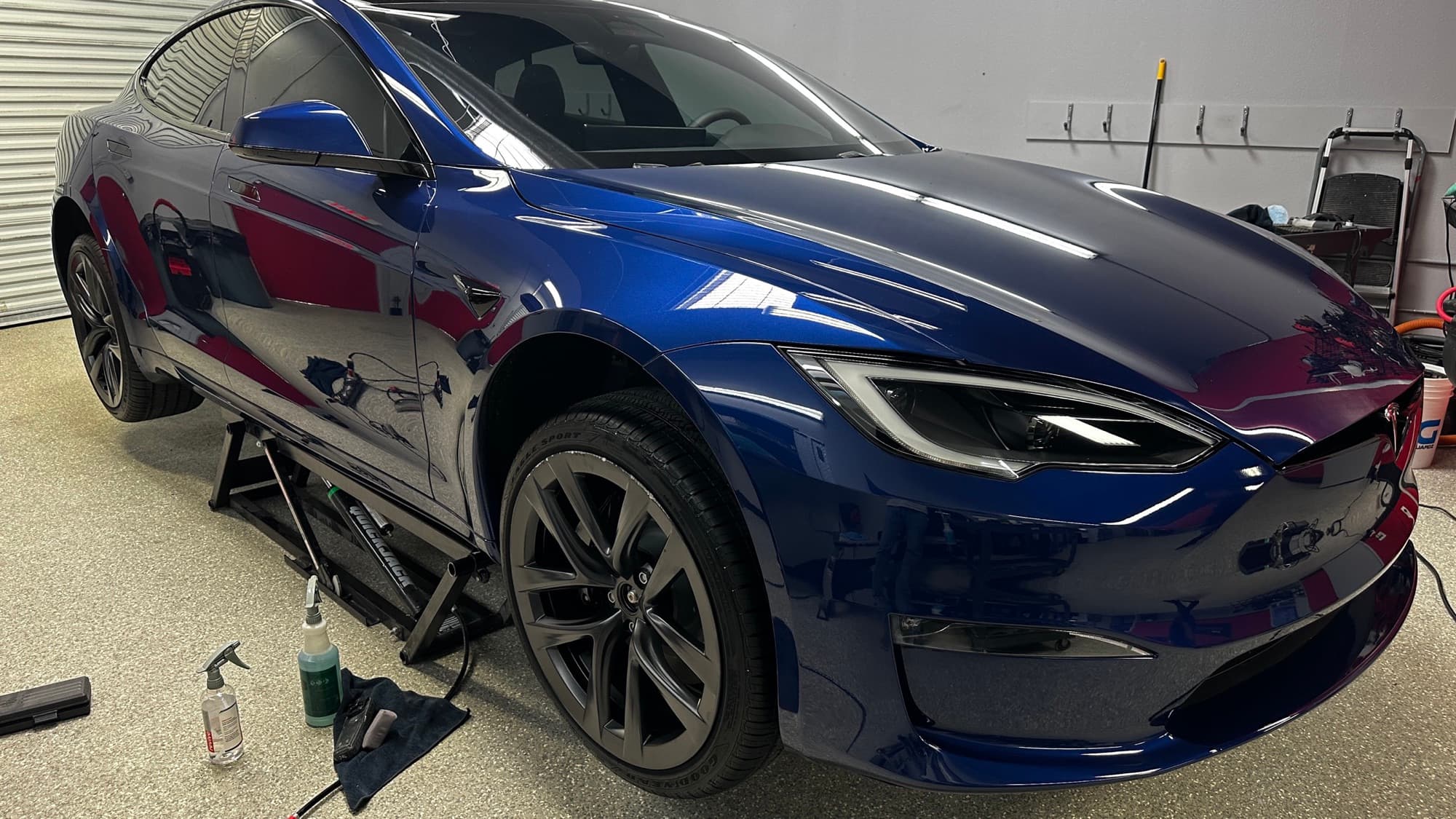
Single-stage correction, by design, cannot chase out its own artifacts. There's no refinement stage. The shop is counting on filler-laden products or a customer who won't look too closely. On a dark-colored vehicle — black, deep blue, charcoal — those artifacts show immediately. Dark paint is unforgiving precisely because it amplifies any surface irregularity. A single-stage process on a black BMW or a dark-painted Tesla is not correction. It's noise.
What a Real Multi-Stage Process Looks Like at The Recon Pros
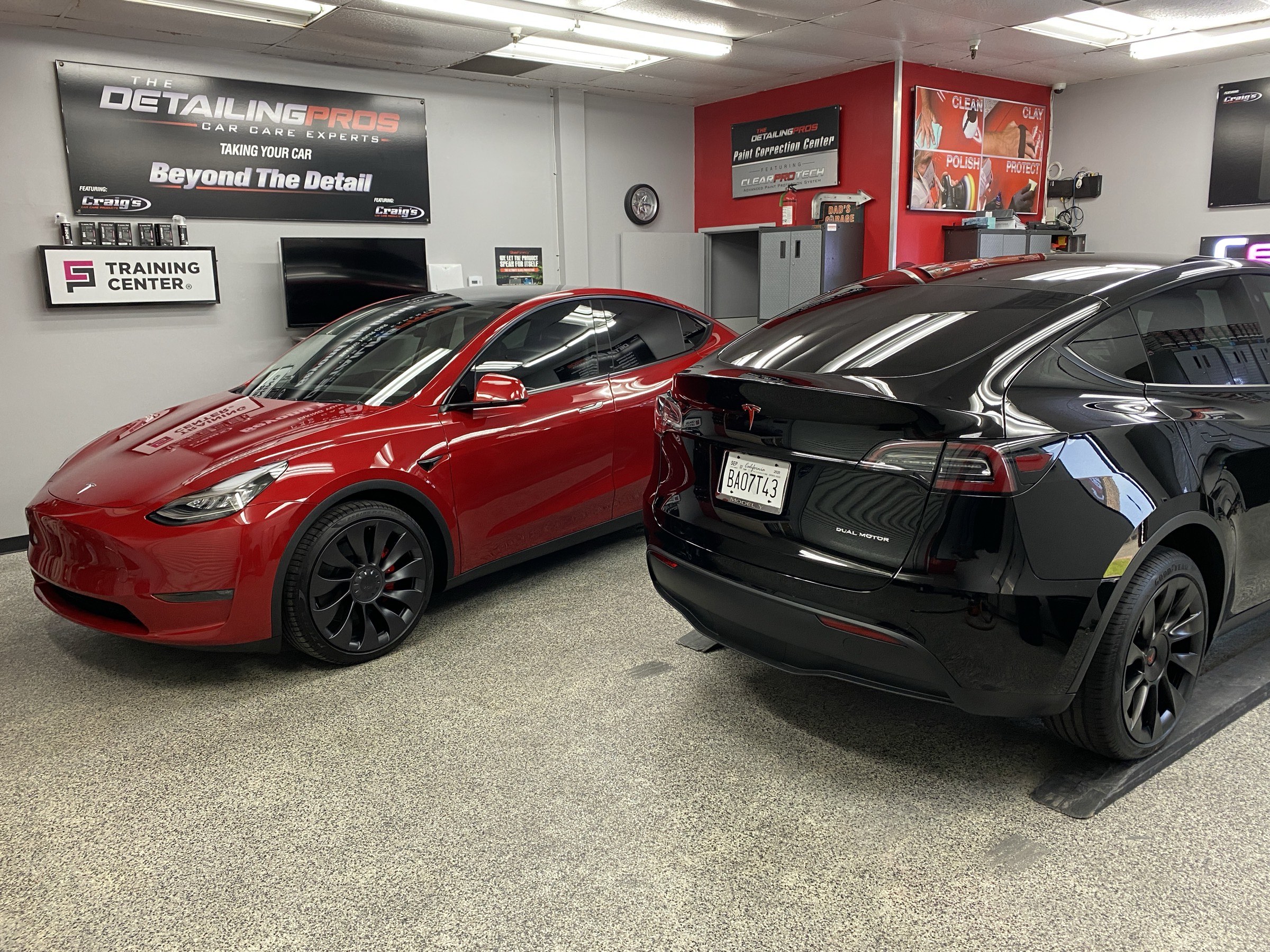
At The Recon Pros in Huntington Beach, no correction starts without a paint depth gauge reading. Every panel is measured before a pad touches the car. That's not a formality — it's how you avoid cutting through a clear coat that's already been over-worked by a previous shop. Clear coats have a finite thickness, and deep scratches that penetrate below the clear coat cannot be fully eliminated by any paint correction process. Understanding that boundary before you start is the difference between a professional result and causing permanent damage.
From there, the process runs in defined stages:
- Stage 1 — Heavy compounding: Targets deep defects, oxidation, and embedded contamination. This is where the structural removal happens.
- Stage 2 — Refinement polishing: Eliminates the haze and micro-marring introduced by Stage 1. This is what single-stage shops skip entirely.
- Stage 3 (where required): A finishing polish that brings the surface to a near-mirror gloss with zero residual marring — the baseline required before any coating application.
The result is verified under proper lighting before any vehicle is handed back. Not checked in the parking lot. Checked under inspection lighting, the same way defects were identified in the first place. Mel Craig has been doing this work for over 50 years — and that standard of verification is non-negotiable in this shop.
Learn more about the full process on our paint correction Huntington Beach service page, or explore the technical depth behind what we do on our paint correction explainer.
Why This Matters Before Any Coating Goes On
Here's where the stakes get real. If a ceramic coating or a self-healing protective coating is applied over a paint surface that still contains defects — swirl marks, haze, oxidation, scratches — those defects are sealed in permanently. A coating doesn't fix what's underneath it. It locks it in place under a hardened layer that now has to be removed to get to the problem.
That's not a hypothetical risk. It's one of the most common problems our studio corrects after other shops have applied coatings over uncorrected or single-stage-treated paint. The vehicle owner paid for a coating and still has swirls. The only fix is to remove the coating, correct the surface properly, and reapply — a process that costs significantly more than doing it right the first time.
Multi-stage paint correction before a coating application isn't a premium add-on. It's a prerequisite. Any shop that skips it is selling you a coating over a compromised surface.
If your vehicle is a Tesla or another EV with soft clear coat, the stakes are even higher. See how we handle those specific materials on our Tesla detailing and paint protection page.
The One Question Worth Asking Any Detailing Shop
Before you book correction work anywhere, ask this: "How many stages do you run, and what do you use in the refinement pass?"
If the answer is vague — "we use a compound and polish" without specifics — that's a one-step shop dressing up their language. If they can't describe what the refinement stage addresses or why it's necessary, they're likely not running one. A shop that understands multi-stage correction can explain exactly what each stage does and why skipping any of them leaves defects behind.
You can also look at their past work. Real paint correction results hold up under direct sunlight, not just in staged photos. The results gallery at The Recon Pros shows verified before-and-after documentation from actual vehicles — because process without proof is just a pitch.
Ready to find out what your paint actually needs? Start with an inspection — we'll measure your clear coat, identify what's correctable, and give you a clear recommendation before any work begins.
Frequently Asked Questions: Multi-Stage Paint Correction
Can't a good wax or sealant cover swirl marks well enough?
Waxes and sealants contain fillers that temporarily mask swirl marks and fine scratches by filling the grooves with product. Once that product washes away — typically within a few weeks to months — the defects return. Multi-stage paint correction physically levels the clear coat so the defect no longer exists. There's nothing to fill because there's nothing left to hide. It's a permanent correction versus a temporary cosmetic fix.
How do I know if a shop is actually doing multi-stage correction or just using filler products?
Ask what they use in each stage and what the refinement pass specifically addresses. A legitimate multi-stage process involves a heavy cut compound, a separate mid-stage or refinement polish to eliminate haze from the first stage, and verification under inspection lighting at the end. If a shop can't clearly explain those stages — or says they do everything in one pass — they're not running a true multi-stage correction.
Will multi-stage paint correction thin my clear coat too much?
This is a legitimate concern and exactly why pre-correction paint depth measurement is mandatory in a professional shop. Measuring each panel before starting tells the technician how much clear coat is available and how aggressively the correction can proceed. On vehicles with previously over-worked clear coats, a skilled corrector will dial back the cut to protect what's left. No responsible shop starts cutting without knowing where the floor is.
Do dark-colored cars really need multi-stage correction more than light-colored cars?
Dark paint — black, charcoal, deep navy — amplifies surface defects because of how light reflects off those colors. Swirl marks, haze, and buffer trails that might be subtle on white or silver paint are immediately visible on dark finishes. Single-stage correction on a dark vehicle routinely leaves behind marring that's more noticeable than the original defects. Multi-stage correction is the only reliable path to a genuinely defect-free result on dark paint.
What happens if I get a ceramic coating applied before paint correction?
Any defects present when the coating is applied — swirl marks, oxidation, haze — get locked under the coating. A hardened ceramic layer doesn't hide those defects over time; it seals them in permanently. Correcting the surface after the fact requires removing the coating first, which adds significant time and cost. Proper multi-stage paint correction before coating application is a prerequisite, not an optional step.
How is The Recon Pros' approach to multi-stage correction different from a standard detailing shop?
The Recon Pros is led by Mel Craig, with 50+ years of hands-on paint correction experience and credentials as a Revivify Authorized Installer. Every vehicle starts with paint depth measurement, a test spot, and a documented correction plan. Verification happens under proper inspection lighting before any vehicle leaves the studio. Mel also trains professional detailers — the standard in this shop is set by someone who teaches the craft to others in the industry.
Can multi-stage correction fix scratches that go through the clear coat entirely?
No paint correction process — single or multi-stage — can eliminate scratches that penetrate below the clear coat into the base coat or primer. However, multi-stage correction can significantly minimize their appearance by leveling the surrounding clear coat and reducing the visual contrast around the scratch. Pre-correction paint depth measurement and an honest assessment of each defect will tell you exactly what's correctable before any work begins.