Short answer: Dark paint — black, navy, dark gray, deep red — reveals swirl marks, water spots, and holograms far more visibly than lighter colors under direct sunlight, even though the underlying defects are identical across colors. That means dark cars need multi-angle raking-light inspection to catch every defect before correction, and often benefit from a self-healing coating more than any other color group. See our deep dive specifically on black paint correction for the black-specific breakdown.
Why Dark Paint Shows Defects Differently
Light-colored paint scatters reflected light across a wider angle, which visually masks fine scratches and swirls. Dark paint reflects light in a tighter, more mirror-like pattern — so the same swirl that's nearly invisible on silver or white lights up as a distinct spiderweb pattern on black or navy under direct sun. The defect isn't worse on dark paint. It's just visible.
What Changes in the Inspection
- Raking light at multiple angles — overhead LED alone misses defects that only appear at a low, glancing angle on dark paint
- SunGun inspection — simulates direct sunlight indoors, since that's the environment where dark-car defects actually show up to the owner
- Slower panel-by-panel review — dark paint takes longer to properly inspect because more defect categories are visible and need to be mapped before correction starts
What Changes in the Correction Itself
The compound and pad combination has to fully remove — not partially reduce — every defect on dark paint, because a partially corrected dark panel still shows remaining marring under sunlight even if it looked clean under studio lighting. This is why dark-color corrections at The Recon Pros are typically planned as a full 2-stage minimum, even on newer vehicles.
Why Coating Choice Matters More on Dark Cars
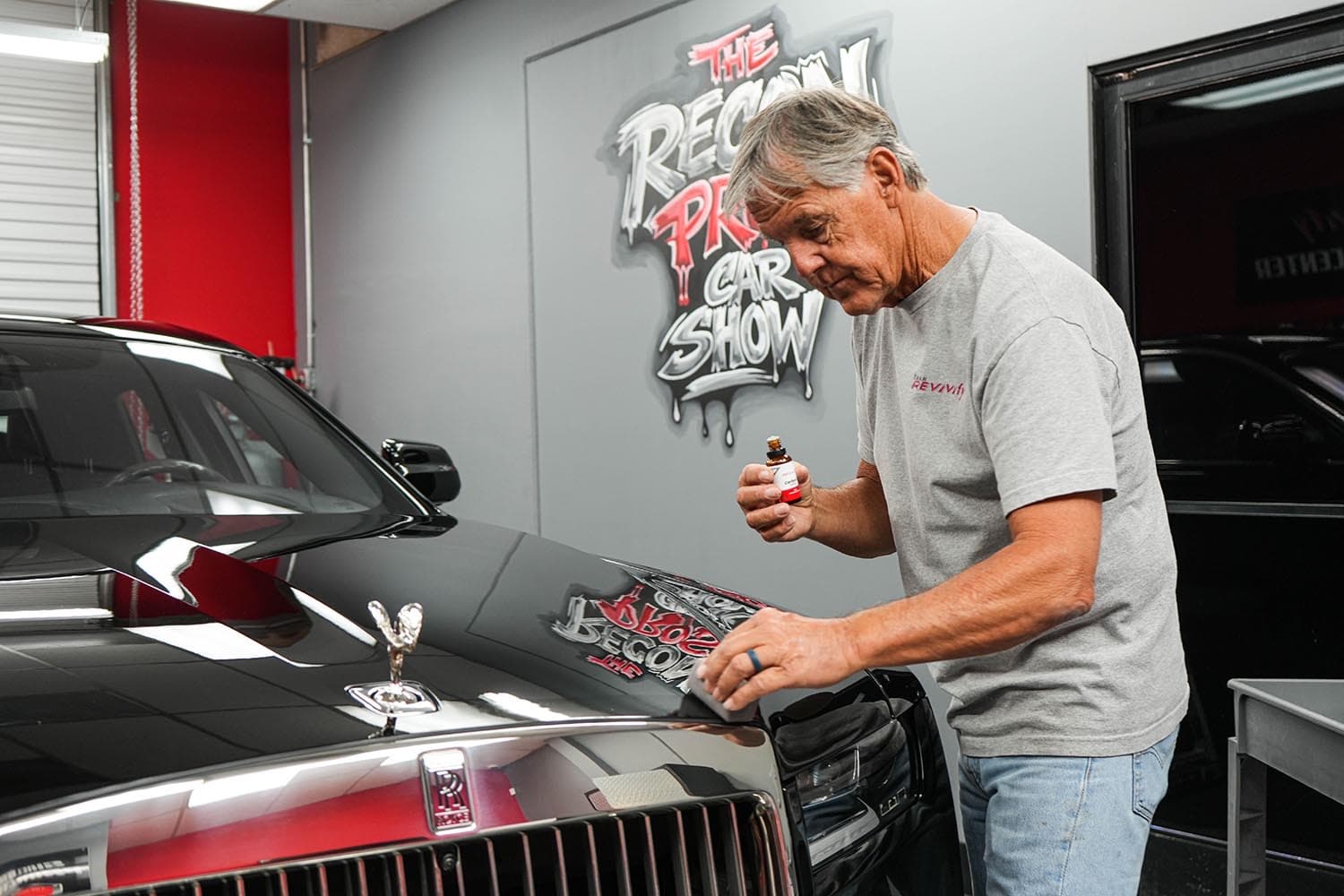
Because dark paint reveals new marring faster than any other color, the gap between a rigid ceramic (which locks in every future scratch) and Revivify (which heals light marring with heat) shows up sooner and more dramatically on dark cars. It's the single color group where we most consistently recommend Revivify over standard ceramic.
Frequently Asked Questions
Do all dark colors behave the same, or is black the worst?
Black is the most extreme case, but navy, dark gray, and deep red all show the same pattern to a lesser degree. Any color darker than mid-tone benefits from the same inspection and coating approach.
Will my dark car ever look completely defect-free?
Immediately after a full correction, yes — under any lighting. Maintaining that long-term is a function of wash technique and coating choice going forward, which is exactly what Revivify is built to help with.
How much does correction cost on a dark daily driver?
A Stage 2 correction plus Revivify coating on a dark sedan typically runs $1,200–$1,600 at The Recon Pros; larger vehicles or heavier defect loads run higher. Book an inspection for an exact, itemized quote.
Own a dark-colored daily driver? Book an inspection at The Recon Pros in Huntington Beach.